

In praise of the Red Hen
A tribute to the women who hold us together — like my aunt

On a foggy morning along the Russian River last summer, my aunt — “Auntie” — picked up my 8-year-old for a day at the movies. On seeing him, she gave him a big hug. He melted into her sweater. She radiated warmth. I snapped a picture. And when I look at that picture today, it captures so much of who my aunt has always been — a woman who gathers, uplifts, and brings warmth and wonder wherever she goes.
Today she turns 80. That’s reason enough to write a tribute. But I’m also writing because it’s taken me a long time to appreciate the archetype she embodies, the “Red Hen” as I’ve come to think of it.
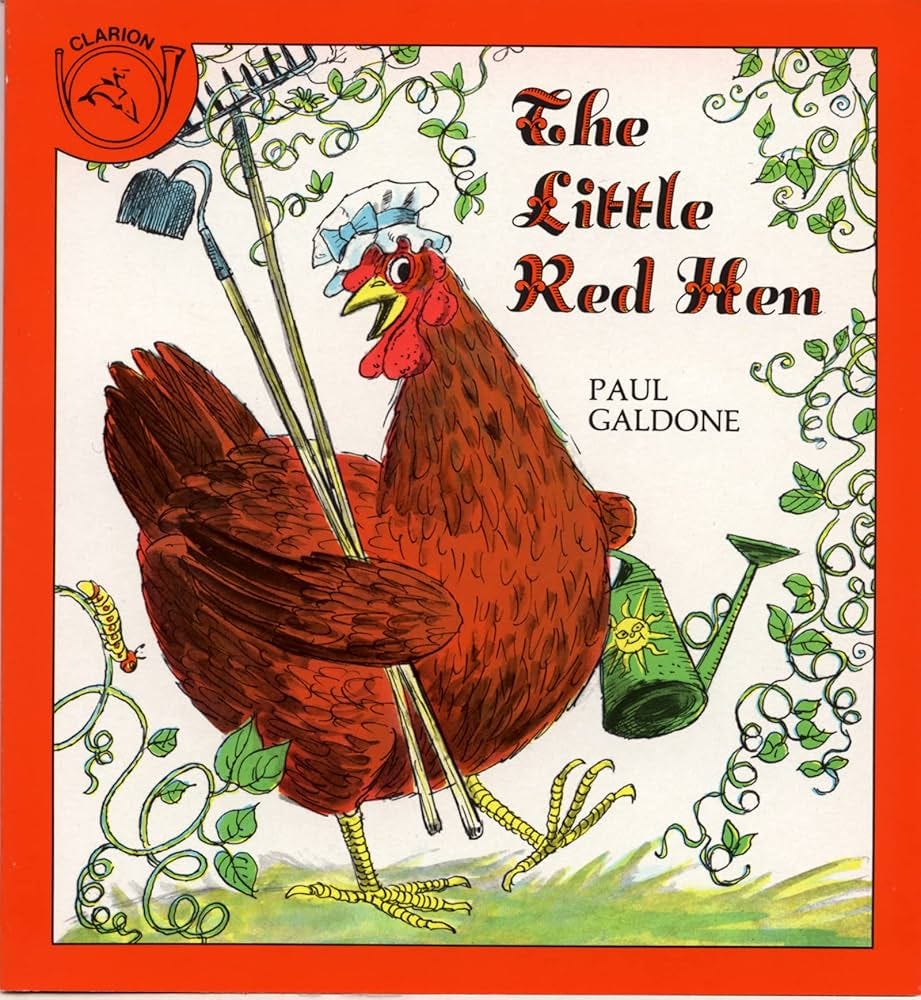
The name comes from a care package she and my cousins sent me when my son was born. Inside was the children’s book, The Little Red Hen. The story is simple: a hen does all the work to make bread. She plants the wheat, harvests it, grinds it, and bakes it. Each time she asks other animals to help, they reply, “Not I.” But when the bread comes out of the oven, warm and fragrant, they all want a slice. And the hen says, essentially, “Where were you when I was making it?”
It’s a Biblical lesson in storybook form: you reap what you sow.
The more I thought about it, the more I realized the Red Hen is a female archetype — broader than the story lets on and, yes, gendered. The Red Hen is the woman who holds everything together. The one who gathers and inspires, keeps traditions alive, hosts dinners with homemade desserts, and adds to her community in a dozen ways, seen and unseen. She’s the one who makes spaces feel magical, not by accident but by invisible labor that most people never notice. And through it all, the Red Hen never loses her sense of self. She’s dynamic, steady, and formidable.
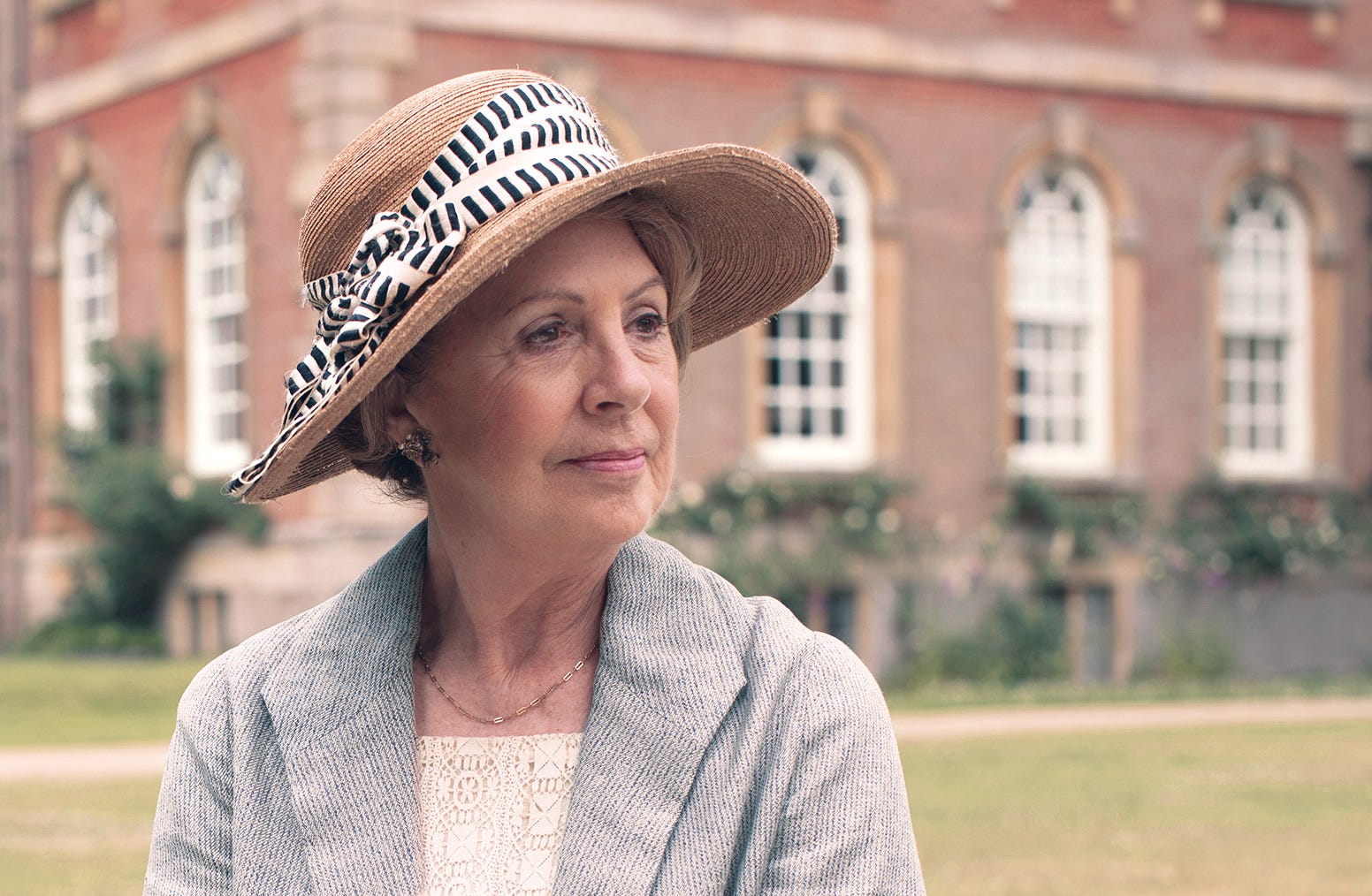
In Downton Abbey, the Red Hen figure is not the Dowager Countess but her foil and eventual ally, Mrs. Crawley. A doctor’s daughter and trained nurse, Mrs. Crawley is the one who insists on turning Downton into a convalescent hospital during the war and pushes the village toward more modern care. She’s pragmatic and kind-hearted, progressive yet grounded, and always tending to the social and emotional fabric that keeps everyone afloat.
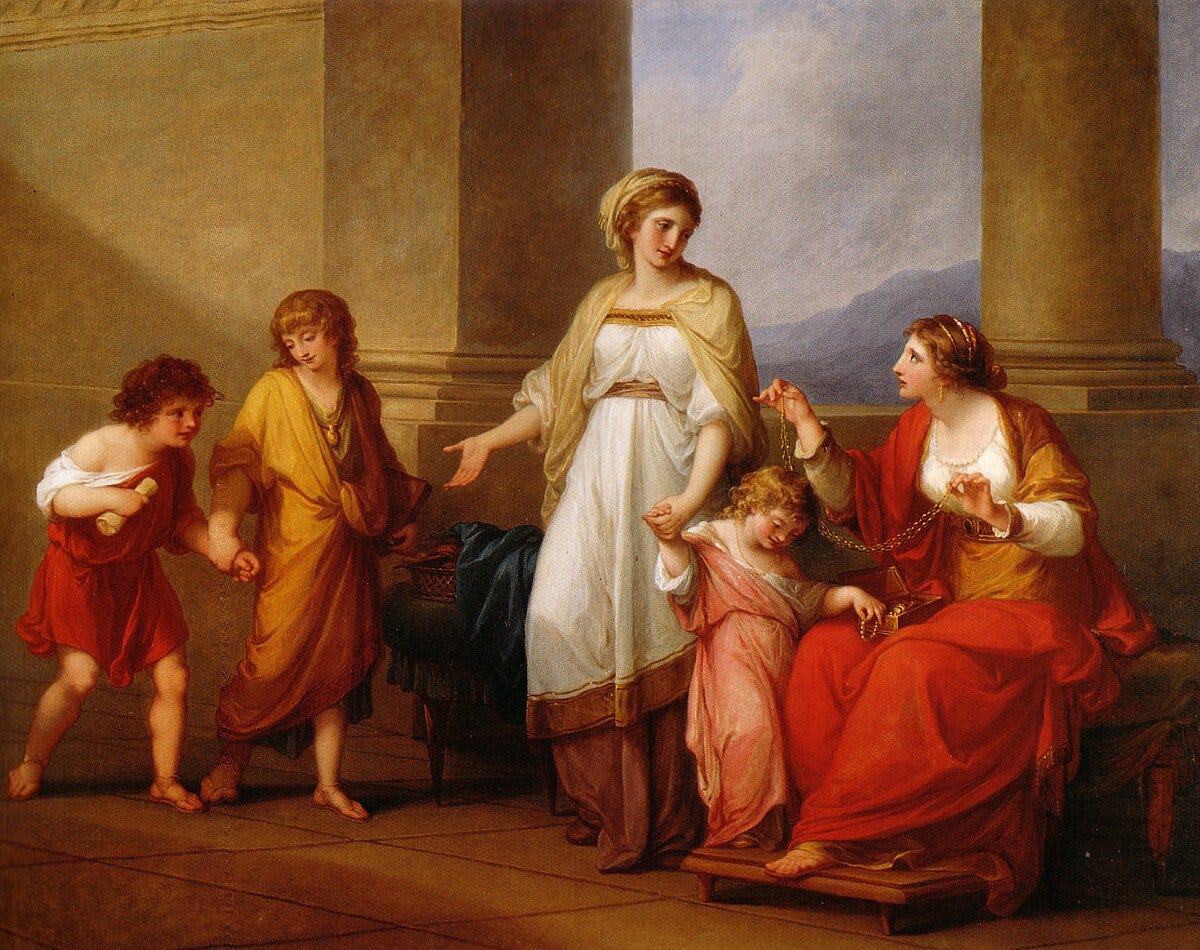
Once you notice her, you see the Red Hen archetype everywhere — in literature, history, and contemporary society. In the Bible, she appears as Ruth or Mary. In ancient Rome, she’s Cornelia, the noblewoman who pointed to her children saying, “These are my jewels.” In the Odyssey, while Odysseus is on his quest, Penelope holds things together in Ithaca for twenty years. The Red Hen doesn’t demand center stage, but she’s always there, keeping things going.
My aunt has been quietly doing this work all my life.
When I graduated from college, she arrived with a silver pitcher — a family artifact — that was engraved with my name and my school. It sits on my bookshelf to this day.
She spent her career in early-childhood education, and you can feel it in the way she moves through the world. She makes people feel seen and special, especially children. She always seems to know what to say, what to ask, and how to meet you where you are.
Every summer, she hosts a dinner for our extended family at her cabin on a hill. As a kid, that cabin felt enchanted — swinging porch beds, a fire pit, a dining table overlooking the redwoods, and hand-painted sayings on the wall. Only recently did it really hit me: magic doesn’t just happen. Someone makes it. And it’s usually a Red Hen like my aunt.
Of course, every archetype has a shadow. Red Hens can veer into “Karen” or schoolmarm territory — judgmental about the “right” way to do something, overly attached to their plans, or overly protective of norms. But what they’re actually doing, at their best, is safeguarding something fragile: the rituals, standards, and continuity that make life feel stable and meaningful. My aunt strikes this balance brilliantly. She holds high standards while staying warm, knows when to insist and when to let go, and always makes room for people to be themselves.
And she’s not defined by service alone. She is curious, intelligent, and engaged with the world. I’ve always admired that she went back to finish her college degree in her late fifties, as an empty nester. She didn’t need it for her career; she did it for herself, out of pure intellectual appetite. She paints watercolors, joins book clubs, practices yoga and water aerobics, and is a grandmother to four.
Red Hens are like this — always advancing themselves, their families, and their communities forward. For much of my life, I didn’t appreciate their value. I barely noticed them. But that changed when I became a parent and hit midlife. I started seeing Red Hens everywhere — leading, hosting, organizing, encouraging, and holding things together. Older and younger women alike — and yes, some men too. I realized how essential they are to families, societies, and civilizations.
If I had to put words to my aunt’s worldview, it would be something like: Love people, especially children. Know yourself. Explore the world. Leave things better. And always, always help make the bread.
That’s the Red Hen way.
So this essay is for my Auntie on her birthday — a small way of saying how much I admire and appreciate you.
To everyone else: notice the Red Hens in your life. Appreciate them. Thank them.
And here’s hoping for many more summers of “yoo-hoos,” warmth, and magic.
A lovely tribute and to recognize her while you have her.
Martha in the gospel of St. Luke.
Many of us became much more henlike during Covid. If only it had lasted!