

The boomer reckoning no one's ready for
The boomer era is ending. How we manage the transition will shape the future of America and other Western democracies.

This is part 1 of a series on transitioning to a post-boomer world.
- Part 1 - The boomer reckoning no one’s ready for (this essay)
- Part 2 - Boomer caregiving will wreck our politics
- Part 3 - The long boomer farewell
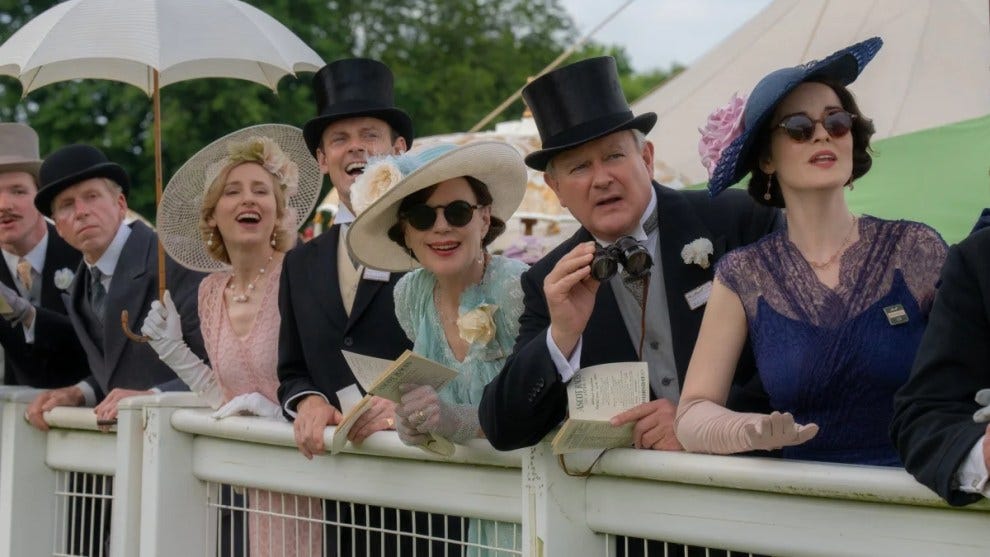
I probably shouldn’t admit I’m excited to see the movie, Downton Abbey: The Grand Finale, when it comes out next month. But… well… I am. It’s the closing chapter of the British series about the aristocratic Crawley family and their servants, navigating life as the old order gives way to modernity.
This time, the family must manage the estate after the death of the Dowager Countess, the iconic matriarch played by the late Maggie Smith. In the trailer, the butler Mr. Carson greets the New Year in his characteristic baritone: “Welcome to 1930!” The context is clear: the Crawleys are stepping into a decade of seismic change, while trying to preserve an estate built for an older era.
That’s where America and the West are now. The postwar boomer era is ending just as AI and automation accelerate. Over the next two decades, these forces will reshape the world more profoundly than most of us are prepared for. Mr. Carson might as well say, “Welcome to 2030!”
Everyone’s fixated on AI, but few are thinking seriously about generational succession. It’s one of the most consequential transitions in history, yet we’re bumbling into it like an impulsive teenager who’s too busy gaming to plan for the future. At least the Dowager Countess made a plan before she died, passing Downton to her granddaughter Lady Mary.1 We have no such plan for the American “estate.”
In my smartest political circles, we sometimes talk about what I call the Boomer Paradox: boomers are holding society back, but they also are holding it together. What happens when they finally fade from the stage? Will we renew our institutions and cultural fabric, or drift into decline and unrest? How will the fiscal math even work? As a nation, we face the same question the Crawleys do: how to navigate generational transition in a rapidly changing world.
In my smartest political circles, we sometimes talk about what I call the Boomer Paradox: boomers are holding society back, but they also are holding it together.
Born between 1946 and 1964, today’s boomers are 61 to 79 years old. They grew up in an era of cheap energy, booming birthrates, high-trust institutions, and broadly shared prosperity. Civil rights advanced, the Cold War ended, and upward mobility felt guaranteed. They bought houses for a few huckleberries,2 paid pennies for college tuition,3 and gave us the Clintons and Phil Donahue. Although they endured major challenges — Vietnam, Watergate, AIDS, and recessions — most would agree they got lucky in the generational lottery.
Even now, society revolves around them. Boomers control 52% of U.S. household wealth, 40% of real estate value, and the majority of top political offices. By contrast, millennials — now the largest working-age group — hold just 6% of total wealth. Social Security and Medicare, which primarily benefit boomers, consume 40% of the federal budget.
Throughout my life as a late Gen Xer, boomers have been the sun our society revolves around — the Marsha to our overshadowed Jan.4 If boomers were a Greek god, they’d obviously be Narcissus, gazing into their own reflection.5 In the past, I’ve burned with resentment toward them, partly as a juvenile projection of frustrations with my parents. Now, as a parent myself, our boomer-centric society feels jarring in new way: Why aren’t we investing more in future generations?
But resentment towards boomers is stupid. Many of my closest friends, mentors, and family members are boomers. They didn’t choose their generation any more than I chose mine. They helped build much of the world we live in, often for the better. They paid into Social Security and deserve dignity in old age. Our task isn’t to vilify them but to prepare — together — for the transition ahead.
The greatest achievement of the postwar boomer era has been the global ascendance of neoliberalism, free markets paired with political liberalism. This has delivered unprecedented economic growth, lifted billions from poverty, expanded civil liberties, and extended life expectancies. Those are huge accomplishments.
But unbridled neoliberalism has left new challenges. For the right, it’s mass migration, woke absurdity, social fragmentation, and cultural degeneration. For the left, it’s inequality, corporate power, and creeping oligarchy. For everyone, there’s been a collapse in trust in government, media and each other. Healthcare, education, and housing are expensive as hell. Meanwhile, the geopolitical environment is more dangerous than its been in decades.
The hard truth is that the postwar American model is unsustainable and must be reformed. We need to internalize this. Boomer denialism — acting like an ostrich, pretending we still live in the 1990s — isn’t helpful. But neither is the burn-it-all-down attitude I see among jaded Zoomers, who take for granted the many things that still work.
The hard truth is that the postwar American model is unsustainable and must be reformed. We need to internalize this.
Our politics now oscillates between these two energies, denialism and radicalism. And they’re weirdly interdependent: the more we bury our heads in the sand, the more oxygen we give radical voices. You see this in figures like NYC Mayor Candidate Zohran Mamdani, who speaks to real grievances but offers warmed-over anarcho-communist ideas that are batshit and dangerous. You even see it in President Trump. I supported him in 2016 for challenging shibboleths, but now recognize the heavy price we pay for his corruption and chaos.
The better alternative is to confront these challenges openly and pragmatically. That means forging some kind of civic renewal agenda. Unfortunately, the structure of our political system makes this near-impossible…. yet it’s the only way. Generational warfare is tempting but that solves nothing. Our best bet is to involve boomers themselves. Without them, reform will lack the political capital to succeed until it’s too late.
Rather than flirting with authoritarianism or tearing up the Constitution, as some now advocate, we should give American democracy a “software upgrade” so it’s stronger and more effective for the future.6 That kind of bipartisan renewal is hard, but I think it’s possible. We must address systemic dysfunctions for the estate to survive and renew.
In sum, preparing for a post-boomer world means facing hard truths, debating solutions, avoiding scapegoating, and committing to the long game of institutional and democratic renewal. It won’t be easy and isn’t guaranteed to work. But it’s our best bet. My Gen X generation is well positioned to lead if we can overcome our aloofness, playing a bridging role between eras and generations.
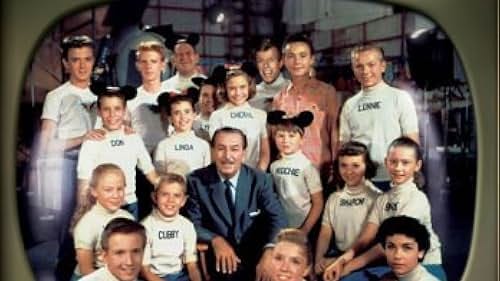
Like it or not, the postwar boomer era is waning, just as AI and automation recode the foundations of society. The Mickey Mouse Club kids are now AARP members. Whether the estate thrives or collapses will depend on how we manage this transition. No one else is going to do it for us.
Special thanks to Lily and Michael Dean for draft feedback.
Downton Abbey: The Grand Finale Trailer
Here’s the succession scene from the 2019 movie:
Related Essays
Theme Song
I linked to the scene from the 2019 Downton movie in one of the clips above.
In 1980, the median home price in the United States was about $47,200 according to U.S. Census data, or $175,000 in today’s dollars. Yes, mortgage rates were absurdly high, but still. Boomers have benefited from declining interests rates and increasing asset valuations.
In the 1974–75 academic year, the average tuition and fees at a public four-year institution was approximately $510.
If boomers are Narcissus, Gen X would be Icarus. See this essay.
A while ago, I drafted up a bipartisan American Reform Agenda. If there’s interest, maybe I’ll dust that off and write an essay on it. I don’t have all the answers, but it’s a conversation we need to have.
Great post.
Where to begin?
As I turn 50 now, I am squarely in the Gen X camp. Many of us Xers can relate to the theme song of Pump up the Volume from the 90's...https://www.youtube.com/watch?v=PuuCezrAUKk
"Everybody Knows that the dice are loaded... everybody knows that the good guys lost."
The neo-liberal order that mostly began with Woodrow Wilson and solidified under FDR has finally collapsed. Also, Gramsci's long march through the institutions hasn't created a viable Marxist utopia, but instead an incompetent network of chaotic institutions run by woke morons. It replaced one corrupt network of people with an even more corrupt and less competent group... as Marxism/socialism always does - Mamdani is case in point.
So when you say that we are not planning for the succession from the profligate generation (Boomers), I would add that there is a contingent of us who have been planning for 30 years. Most of the institutions are not worth saving. Most of the government largesse is not worth keeping. Donald Trump's return was an inevitable rebuke of the last administration (whoever was in charge). A rebuke on an administration that declared war on its own citizens, chose globalism, statism, and compulsory secularism over the Bill of Rights and national sovereignty, that chose Fauci and the WHO over the wellbeing of their own people, chose massive money printing and inflation over fiscal responsibility. The genie is out of the bottle and not just in the USA, but all of the western world is starting to figure out what unrestricted immigration, DEI run institutions, and woke politics do to a country. So the transition from Boomer to whatever is next is, I fear, going to be a rocky road.
Time for popcorn!
Fun fact:
The cost of the average house in 1950 was 182 oz of gold. The cost of an average house in 2025 is 120 oz of gold. The difference is more a loss of dollar value than an increase in cost.
I have been waiting a long time to say this. For everyone who wants to knock a boomer, think about this. I remember saying, back in the 1960s that if we did not do something about cleaning up the rivers, lakes, and bays, there wouldn't be a drop to drink or a fish to be had in 50 years. I could see it. It didn't take an expert.
And guess what? It happened. Know why? Because a bunch of "boomers" (called hippies back then) were willing to endure being really unpopular with their peers and the public to get laws changed that have made today's water ways swimmable. So you don't get mercury poisoning by just falling out of your sailboat . Organizations like Greenpeace which were oh so fun to mock and hate, but somehow the job got done. But all I hear is now is how the boomers are responsible for the destruction of the planet. All I'm saying is... not ALL of us.