


You can just do things, they say. So why whine?
I know, I know. Talking about agency is very 2025. Still, it’s not consistent to believe we’re living in an age of agency and also that we’re powerless to build the future we want to live in. So which is it?
A year ago, Peter Banks and I met in person for the first time over Thai food. We were talking about politics and the future, and he said something that stuck with me: “Why should I care about national security when I can’t even afford a house?”
“Yeah,” I thought, but nodded instead, swallowing a bite of drunken noodle.
I told him about The Boyd Institute, the nonprofit policy institute I started as a side project in 2023, mostly to put my political energy someplace other than the latest culture war drama on Twitter. At the time, it focused on national security-related issues.
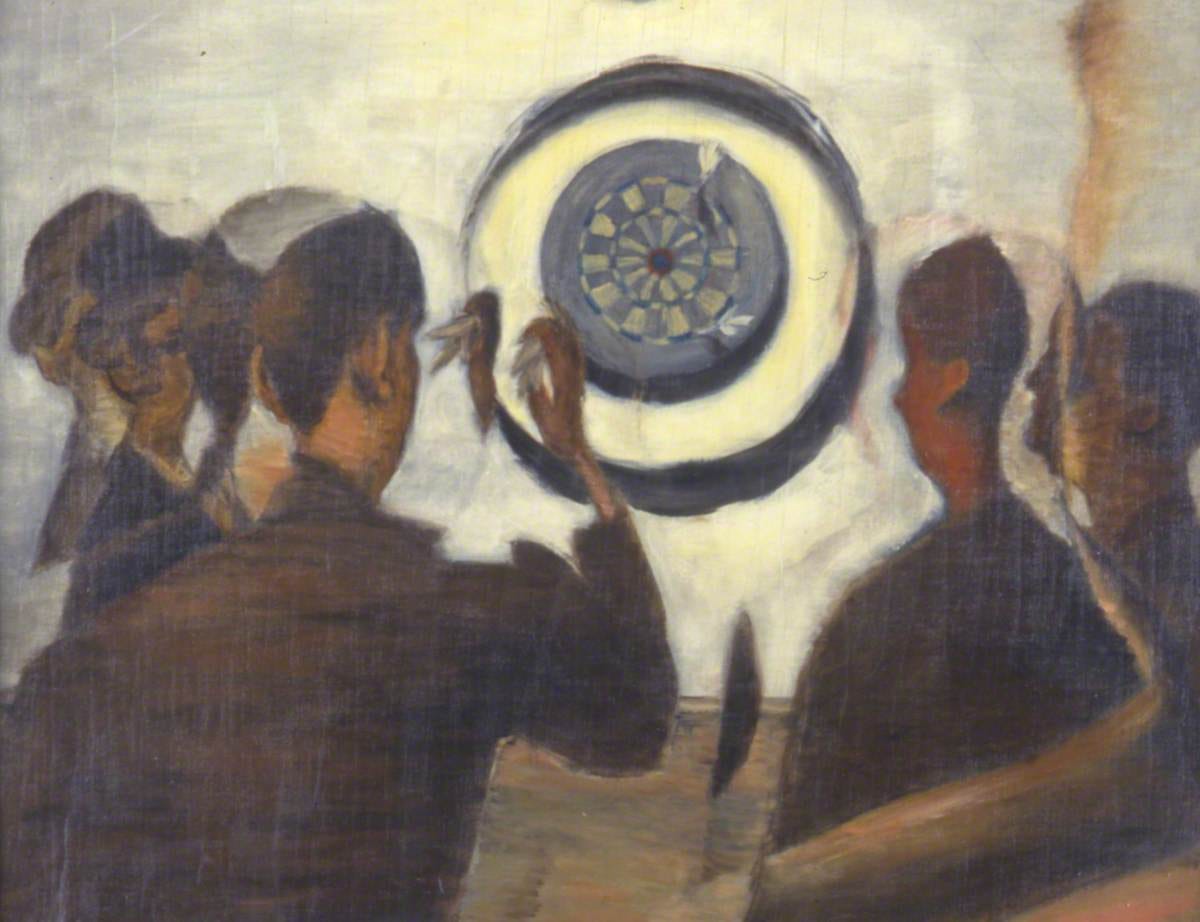
I was once introduced at a NATO summit in Riga as “the father of memetic warfare,” based on a paper I’d published in their strategic communications journal. Ironically, I also got PTSD from posting in the early Trump era. In late 2020, depressed and isolated from Covid, I quit social media for two years and grew critical of Trump. Starting Boyd was a way to come back to politics in a way that felt more constructive. It was a dart thrown in the air to see if it would hit, with little downside if it missed. A small act of agency.
Peter, 28, had just dropped out of a PhD program at Stanford and was figuring out what was next. Like me, he was raised Mormon but isn’t now. He was tall and newly married. He looked quintessentially Gen Z with his baggy t-shirt, silver necklace, and shaggy hair.
A few days after that lunch, Peter pitched me on doing contract work for Boyd, mentioning something about colonizing space. I admired the boldness of his email. It was his own dart in the air. I said yes.
With his comment about buying a house lingering, I decided to refocus Boyd’s mission on domestic issues. Peter and I joked about “building a bright post-boomer America” for the generations coming next, tackling the problems standing in the way. The idea stuck. We decided to do the next sprint on the very issue Peter complained about at lunch, housing, and that he would run it. I remember exhorting him in an unc-like voice: build the future you want to live in.
Peter enlisted William Miller, and they dove into housing research and started an essay contest. Their acts of agency begat more acts of agency. Soon, dozens more people were thinking about the same problems we were, offering their own solutions. The top essay came from PhD economist Nathan Smith, who argued for “the Coase-ification of zoning,” essentially a NIMBY buyout plan for land-use rights.
At the end of the year, when Peter’s contract came to a close, I’d seen enough. I offered him a full-time role as president of The Boyd Institute. He accepted, and we spent the first quarter of 2026 handing things over.
In early April, I called Peter. “I’m officially firing myself,” I said. “This is your baby now.” I told him he wouldn’t hear from me all quarter. So I stepped away. I walked the Camino. I watched as Peter and Will chose the next sprint topic, debts & deficits, and ran the organization without me. More essay contests begat more people and ideas. More darts.
When July came around, I got back in touch. I told them I’d now support them at the board level rather than working “in” the organization. Recently, we set the strategy for the rest of the year.
At a recent dinner we hosted on “what to do about gerontocracy,” one of our guests turned to me. “Who are you again?”
My ego meowed like a sick kitten. I smiled and said Jeff. He didn’t know I founded Boyd, much less that I was involved with it or had organized the dinner he was attending. It stung, and I loved it.
Everyone talks about the empowered individual these days, especially in tech circles — the solo founder, the one-person unicorn, the guy with a hundred agents working while he sleeps. It’s like Great Man of History rebranded for hustle bros. But then the same people complain that they can’t change the future, that they’re powerless against historical forces like technology, demographics, and war. I know because I’m one of them. I dance in this contradiction.
But Boyd is reminding me how small, ordinary acts of individual agency can build on one another. My dart in the air didn’t build anything by itself. Peter’s dart, thrown back, did. Then Will’s. Then a stranger’s essay on land rights. Maybe next some donate, join a group chat, or show up at an event. Each act is a dart that might miss or might stick.
Agency stacks. For a founder, that can mean making yourself irrelevant. Your job is to create conditions for other people to exercise their own agency, then get out of the way and let the network grow. Politics works at a different scale, but I sense AI is shifting the physics of collective action. The more empowered individuals become, the more powerful their networks become.
Put differently, the “empowered network” will multiply the power of the empowered individual. I’ve started thinking of this as “networked agency,” where empowered individuals loosely coordinate to accomplish things none could do alone. I suspect the most powerful movements of tomorrow will work that way. I’d love to see Boyd grow into this.
Recently, Peter shared that he and his wife are expecting a baby, due in November, right around Election Day. I think about Peter with his wife and their baby, and my own nine-year-old, who was a toddler during Covid.
You can build the future you want to live in. It won’t happen in isolation, and nothing is guaranteed. Throw some darts and try anyway.
"Throw some darts" yes!
Maximize positive optionality.
Nobody can do everything; everybody can do something. The puzzle is figuring out where we do have agency.